The use of LNG as a fuel for long-distance freight transport has been a boom in Europe for some time, and in Germany the distribution of LNG is only starting to increase. Compared to countries such as Spain, Italy, the United Kingdom, the Netherlands and China, there is still huge potential and much catching up, as according to the forecast of the Federal Ministry of Transport and Digital Infrastructure (BMVI), transport capacity in Germany will increase by 2030 at least by 39% compared to 2010.
“LNG-powered vehicles are perfectly suited for long-distance transport. LNG-powered engines not only produce much lower emissions of pollutants into the air, but are also significantly quieter and therefore allow deliveries to be made in residential areas outside normal times of day, which could help solve traffic density problems, ”explains Friedrich Lesche. LNG engines could easily run on renewable, biogenic or synthetic LNG. In addition, any ratio of fossil, biogenic and / or synthetically produced LNG (mixture) of air and fuel is possible. “To achieve this, we need more investment in Germany to build and expand infrastructure to use LNG as an alternative fuel,” adds Lesche. With almost 10,000 LNG trucks, IVECO is the market leader in European long-distance freight transport.
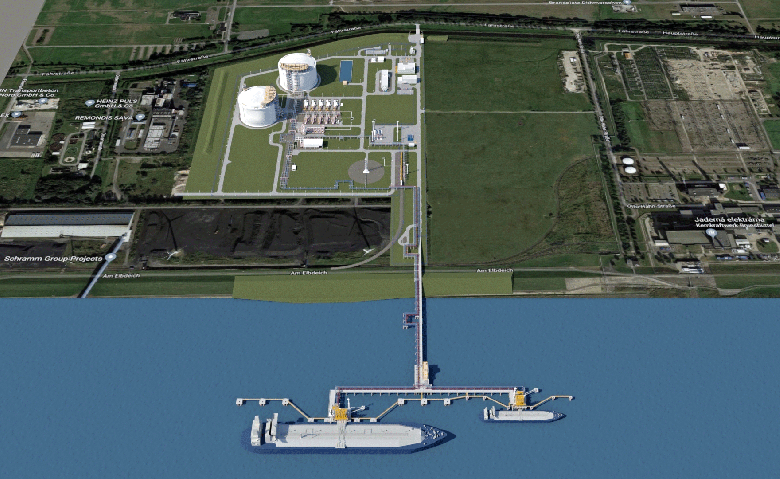
“LNG as a fuel makes a significant contribution to reducing emissions of air pollutants in the mobility sector,” says Rolf Brouwer, CEO of Germany’s LNG Terminal GmbH. “We want to invest in LNG infrastructure in Brunsbüttel to be able to efficiently and competitively meet the growing demand with Germany’s first LNG import terminal.”
LNG can be used as fuel for heavy goods vehicles, buses, seagoing and inland vessels as process gas for industrial companies or after its return to the gaseous aggregate state by heat may be fed into the national natural gas network. It can be transported to consumers via gas network infrastructure and used in heating systems or, for example, in combined heating systems and power plants to generate electricity.
BV and Oiltanking GmbH, a subsidiary of Marquard & Bahls AG, Hamburg, Germany. The aim of the joint venture is to build and operate a multifunctional LNG import and distribution terminal in Brunsbüttel. The project is already attracting strong interest and several framework agreements have already been signed.
The terminal will also provide a wide range of services, including loading and unloading of LNG carriers, temporary storage of LNG, regasification, supply of natural gas to the German natural gas network and distribution of LNG through LNG tanks and tankers.
Source: https://www.offshore-energy.biz/germany-playing-catch-up-in-lng-fueled-long-haul-market/